
Essential-G Discontinuation & Introduction of CarbonizPN-G: Your Questions Answered
Dear Mirimichi Green Community,
We have some important news to share: Essential-G is being discontinued and replaced by our new product, CarbonizPN-G. We understand that you may have questions about this change, so we’ve organized this announcement in a Frequently Asked Questions (FAQ) format to address your concerns and explain the benefits of CarbonizPN-G.
Why is Essential-G being discontinued?
Several factors led to this decision:
- Supply Chain Challenges: Essential-G included inputs like coffee grounds, which have become unreliable in terms of consistent supply and timely delivery. Additionally, manufacturing in Texas required shipping our core CarboMatrix raw ingredients back and forth across the country, increasing costs and logistical complexities.
- Customer Feedback: While Essential-G was well-regarded, we received feedback requesting a higher percentage of biochar and noting that the poultry manure component affected the product’s smell.
- Name Confusion: We received feedback that it wasn’t clear how the Essential-G product fit into our line of soil amendments, and we kept encountering questions about when applicators should select which product.
CarbonizPN-G addresses these and other challenges.
What is CarbonizPN-G?
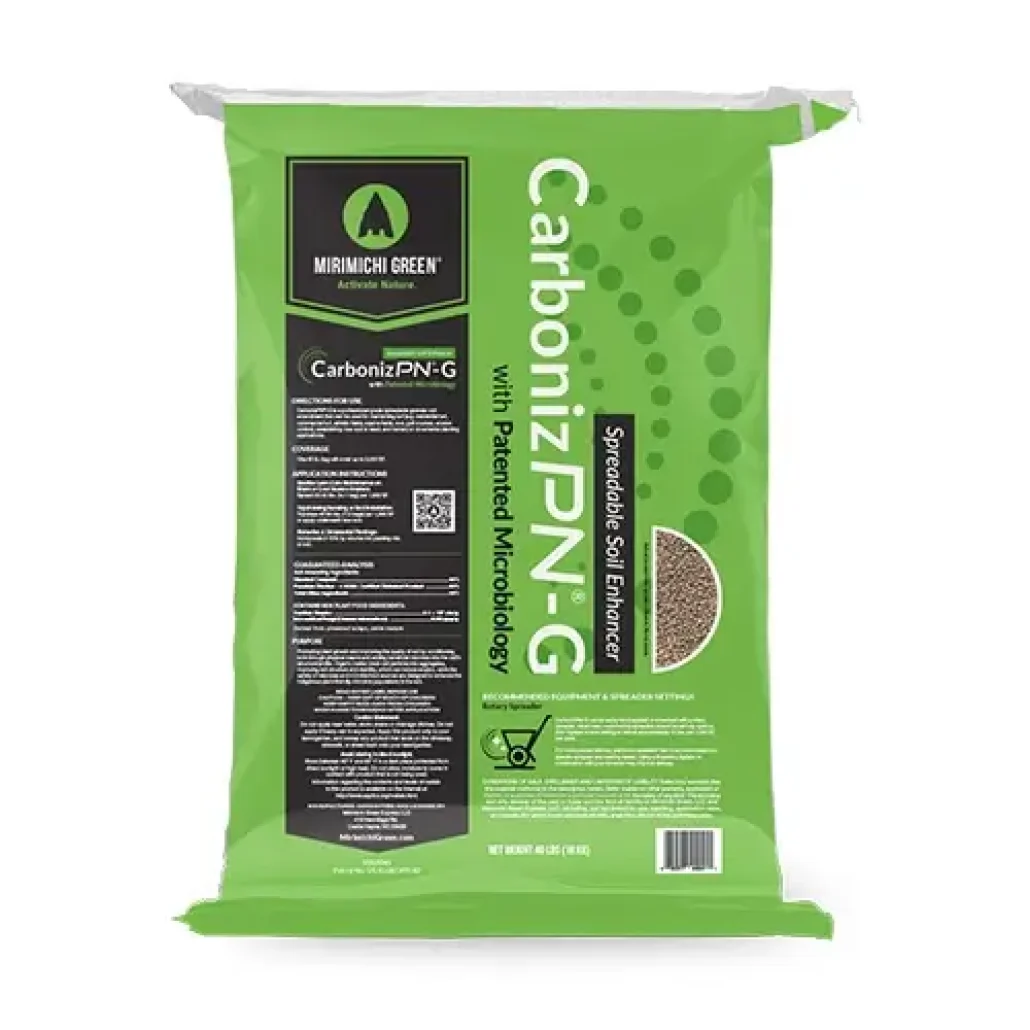
CarbonizPN-G is the granular, spreadable form of our flagship soil amendment, CarbonizPN. It is designed to enhance soil health and provide long-lasting benefits for your landscape.
How does CarbonizPN-G address the issues with Essential-G?
- Higher Biochar Content: CarbonizPN-G contains nearly 50% biochar, providing more permanent carbon per application and improving soil structure and fertility.
- Improved Smell: Made from our premium compost blend without poultry litter, CarbonizPN-G has a pleasant, earthy smell that aligns with the quality you’ve come to expect from Mirimichi Green products.
- Beneficial Microbes: The product is inoculated with beneficial microbes from our ByoSpxtrum product, enhancing soil microbiology and promoting healthier plant growth.
How will this change affect product availability and pricing?
By producing CarbonizPN-G at our home plant in Clinton, NC, and granulating it regionally, we can:
- Ensure Consistent Supply: Reduce interruptions in product availability.
- Maintain Sustainable Costs: Lower production and shipping costs, keeping prices competitive. Pricing should be consistent with Essential-G and similar soil amendments, which were set to go up next year.
What are the benefits of switching to CarbonizPN-G?
- Enhanced Soil Health: Higher biochar content and beneficial microbes improve soil vitality.
- Same Application: The granular form is spreadable and convenient for maintenance routines and you can continue using the same programs you developed using Essential-G.
- Better Product Alignment: CarbonizPN-G will be our lead maintenance product, while CarbonizPN is positioned for installations and topdressing with mechanized equipment. We hope this alignment makes our product offerings easier to understand, sell, and use.
When will CarbonizPN-G be available?
We are currently accepting pre-orders, with deliveries expected to begin in January 2025.
What should I do if I have stocks of Essential-G?
You can continue to use Essential-G as you normally would. When you’re ready to reorder, we encourage you to try CarbonizPN-G and experience its enhanced benefits.
How can I place a pre-order or get more information?
Distributors can submit a purchase order like normal to order@mirimichigreen.com.
This product should already be included on your 2025 distributor price sheet along with the SKUs below. If you need an updated copy of the distributor price sheet or need help getting this new product set up in your computer system, please email order@mirimichigreen.com, and a member of our team will be happy to assist. We anticipate shipping in January 2025
Available Sizes
| Size | Product SKU | Barcode | Pack Out |
| 40 lb. bag | 11540 | 680577449411 | 50 bags per pallet |
| 1 yd. super sack | 115SS | 680577449558 | 2 super sacks per pallet |
Thank You for Your Support
We appreciate your trust and are confident that CarbonizPN-G will exceed your expectations. Your feedback has been instrumental in this development, and we look forward to continuing to serve your landscaping needs with improved and sustainable solutions.
Sincerely,
The Mirimichi Green Team
Questions about CarbonizPN-G
Remediating Salt in Soils Due to Hurricanes and Storm Surge
CarbonizPN: The Ultimate Solution for Hurricane-Induced Salt Damage
When hurricanes hit, the resulting storm surge and wind-driven saltwater can wreak havoc on soils across various environments. The salt left behind can affect soil composition, damage vegetation, and complicate recovery efforts. CarbonizPN, a soil amendment containing biochar and mature compost, offers a highly effective solution to mitigate these effects, promoting soil health and aiding plant recovery. Below, we explore how CarbonizPN can help tackle the challenges posed by saltwater damage following a hurricane.
The Impact of Saltwater on Soil and Vegetation

- Soil Salinization and Structure
Salt from hurricane storm surges leads to soil salinization, which reduces microbial activity and compromises soil structure. This, in turn, hinders plant growth. The biochar component in CarbonizPN helps retain moisture and bind salts, while the compost improves organic matter, fostering microbial life and nutrient cycling to aid in salt recovery. - Dehydration and Nutrient Blockage
Saltwater exposure can cause dehydration in grass and turf, leading to wilting, browning, and even death. High salt concentrations in the soil can also inhibit nutrient uptake, hampering recovery. The biochar in CarbonizPN binds salt ions, and the compost provides the essential nutrients to jump-start new growth. - Water Retention and Root Stress
Saltwater reduces the soil’s ability to retain water, creating osmotic stress on plant roots. Biochar in CarbonizPN improves water retention while simultaneously lowering salt concentration. This allows roots to access fresh water more easily, speeding up recovery. - Soil Compaction
Salt can cause soil particles to bond more tightly, leading to compaction, which reduces root penetration and aeration. CarbonizPN loosens compacted soil with biochar, improving oxygen flow, while compost adds organic matter, enhancing soil structure for better root development.
Applications for Sports Turf and Golf Courses
- Turfgrass Resilience
Warm-season grasses like Bermuda and Zoysia are generally more resilient to salt than cool-season grasses like Kentucky Bluegrass. Applying CarbonizPN to any type of turf helps neutralize salt damage, reducing toxicity with biochar and improving root recovery with compost. - Turf Playability and Durability
Saltwater exposure weakens turf durability, creating patchy, dead spots. CarbonizPN rehabilitates turf by reducing salt levels, enhancing soil structure, and encouraging healthy grass regrowth, which restores surface quality and playability. - Irrigation Strategies
Freshwater irrigation can flush out salts, but CarbonizPN accelerates this process by enhancing soil drainage. Biochar improves water retention, making irrigation more effective, and reducing the need for excessive watering.
Addressing Salt Runoff from Roadways
- Vegetation Impact
Saltwater runoff from flooded roadways can increase soil salinity in adjacent lawns, parks, and golf courses. Applying CarbonizPN along road edges and affected areas helps reduce salt levels and promote soil health. Biochar absorbs salts, preventing further spread, while compost restores nutrient balance. - Drainage Solutions
Combining effective drainage systems with CarbonizPN application offers a robust solution for mitigating salt damage. Biochar enhances drainage, while compost improves water retention, facilitating faster salt removal and supporting vegetation recovery.
Recovery for Residential Lawns
- Signs of Salt Damage
Residential lawns impacted by saltwater show signs of browning, wilting, and poor growth. CarbonizPN helps restore balance by binding salts and encouraging microbial activity, promoting faster recovery of grasses such as fescue, ryegrass, and bluegrass. - Homeowner Recovery Steps
Homeowners can rehabilitate salt-affected lawns by applying CarbonizPN, which reduces salt buildup, improves water retention, and restores nutrient levels. Consistent watering with fresh water and CarbonizPN will expedite lawn recovery.
Mitigation and Recovery Strategies for Parks & Public Spaces
- Rehabilitation in Parks
Saltwater exposure depletes soil fertility and stresses plants in public green spaces. The combination of biochar and compost in CarbonizPN helps restore soil health, neutralize salts, and encourage plant recovery, making maintenance efforts more manageable post-hurricane. - Tree and Shrub Recovery
Trees and shrubs may experience leaf burn and root damage due to salt exposure. Applying CarbonizPN around their bases helps improve soil structure, promotes deeper root recovery, and binds salts, aiding long-term recovery.
Conclusion
CarbonizPN offers a comprehensive solution for mitigating the harmful effects of saltwater on soils and vegetation in hurricane-affected areas. Its unique combination of biochar and compost binds salts, improves water retention, restores microbial activity, and promotes root development across various landscapes—from residential lawns to sports fields and parks. Whether as a preventive measure or a post-storm recovery tool, CarbonizPN is your go-to soil amendment for long-term soil health and plant vitality.
For more information on how CarbonizPN can help protect your soil and landscape, contact Mirimichi Green.
Understanding USDA Certified Biobased Products: What It Means and Why It Matters
In today’s world, more consumers are becoming conscious of the environmental impact of the products they use. This shift towards sustainability is driving the demand for biobased products—those derived from plants and other renewable agricultural, marine, and forestry materials. The USDA Certified Biobased Product label is a reliable indicator that a product meets strict standards for renewable content, offering assurance of its environmental benefits.
What Is a USDA Certified Biobased Product?
The USDA Certified Biobased Product label is part of the BioPreferred Program managed by the United States Department of Agriculture (USDA). This program was established to increase the purchase and use of biobased products. To earn this certification, products must undergo rigorous testing to determine the percentage of renewable content. Products that meet or exceed the minimum biobased content standards are granted the certification.
Benefits of Using USDA Certified Biobased Products
- Environmental Impact: Biobased products help reduce our reliance on non-renewable resources such as petroleum. By choosing these products, consumers support the reduction of greenhouse gas emissions and the promotion of sustainable agricultural practices.
- Economic Support for Rural Communities: The production of biobased products stimulates economic development in rural areas by creating jobs and supporting farmers and producers who supply the renewable materials.
- Improved Indoor Air Quality: Many biobased products emit fewer volatile organic compounds (VOCs), contributing to better indoor air quality and a healthier living environment.
- Reduced Waste: Biobased products are often biodegradable or compostable, which helps reduce the amount of waste sent to landfills.
Why Consumers Should Look for the USDA Certified Biobased Label
Consumers seeking to make environmentally responsible choices should look for the USDA Certified Biobased Product label. This certification provides transparency and trust, ensuring that the product meets high standards for renewable content and contributes to a sustainable future. Additionally, using certified products supports the BioPreferred Program’s mission to reduce our dependence on non-renewable resources and foster the development of the biobased economy.
Mirimichi Green’s Commitment to Sustainability
At Mirimichi Green, we are proud to offer products that align with our commitment to sustainability. Our Premium Biochar, a cornerstone of many of our formulations, is a USDA Certified Biobased Product. This certification guarantees that our biochar is derived from renewable sources and meets the highest standards for biobased content.
All Mirimichi Green products containing biochar or micronized carbon feature our Premium Biochar. This inclusion not only enhances the performance of our products but also ensures that they contribute positively to environmental sustainability. By incorporating USDA Certified Biobased components, we provide our customers with effective, eco-friendly solutions for maintaining healthy and beautiful landscapes.
Conclusion
The USDA Certified Biobased Product label is a mark of sustainability and environmental responsibility. By choosing products with this certification, consumers can be confident in their contribution to a greener future. At Mirimichi Green, we are dedicated to providing top-quality, sustainable products that meet these rigorous standards. Our USDA Certified Premium Biochar is a testament to this commitment, ensuring that every product we offer supports a healthier planet.
Choose Mirimichi Green for your landscaping needs and join us in making a positive impact on the environment.
By highlighting the importance of the USDA Certified Biobased Product label and showcasing Mirimichi Green’s dedication to sustainability, this blog post aims to educate consumers and encourage them to make informed, environmentally responsible choices.
2024 USDA Hardiness Zone Changes
In November of 2023, the USDA updated its plant hardiness zone map for the first time since 2012 – not surprisingly, lots of places are warmer than they used to be.
A full 63% of Mirimichi Green customers saw a half-zone change or more. Mirimichi Green produced a guide to help our users in updated USDA Hardiness Zones.
How do I know if my USDA Hardiness Zone changed?
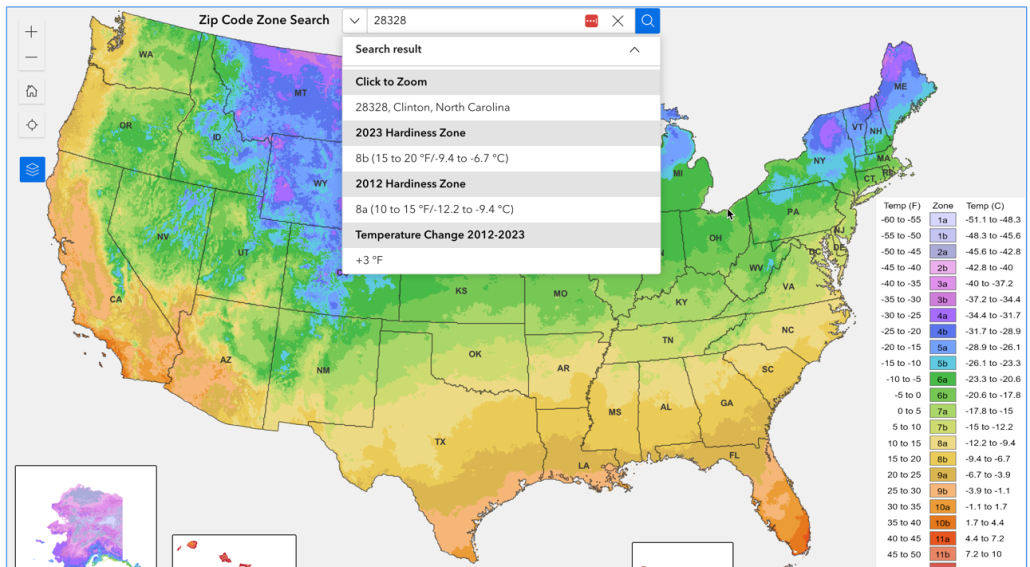
You can search the 2023 USDA Plant Hardiness Zone Map by zip code to see if your area has changed since 2012.
What can I do if my USDA Hardiness Zone changed?
If your zone changed but is still the same number, there’s probably not a lot you need to do, except start to prepare for things to continue getting hotter. As in the example above, Clinton, NC, changed from zone 8a to zone 8b, a halfzone. But the it’s still in zone 8.
If you moved up a number level, like from zone 7b to 8a, you may want to consider making some changes.
For new plantings:
Consider updating your list of go-to flowers, shrubs, and trees to varieties better suited to your current zone. For a list of examples, you can download our PDF below which describes some considerations if you moved up a number level. Please print and use the relevant page. We hope it’s helpful for your staff and customers.
For existing plants:
Improving soil conditions can go a long way in helping established plants continue to survive and even thrive in higher zones. Consider CarbonizPN Soil Enhancer to improve soil fertility and reduce water needs in an increasingly challenging climate.
What is the USDA Hardiness Zone Map?
The USDA Plant Hardiness Zone Map is a valuable resource for gardeners and landscapers in the United States.
The geographical map divides the country into zones based on the average annual minimum winter temperature. Each zone represents a range of temperatures and is useful for determining which plants are likely to thrive in a particular location.
1. Temperature Zones: The map is divided into zones defined by 10-degree Fahrenheit increments. These zones are further subdivided into “a” and “b” sections, each representing a 5-degree Fahrenheit difference.
2. Guidance for Planting: The map guides gardeners and landscapers in selecting plants that are most likely to survive the winter in their region. Plants are often labeled with their hardiness zone information.
3. Limitations: The zone guide certainly doesn’t account for everything. Limitations of the zone map include the impact of microclimates, soil conditions, summer heat tolerance, wind exposure, precipitation and water availability, local typography, season length, and extreme weather events.
The winner of our guessing game is…
Congrats to winner Ray Kirby, CSSR out of Hudson, MA (branch 630), who had the winning guess of 50,000 bags.
Your candy is en route!
That’s 1,000 tons of Carbon Pro-G processed this winter, with more being produced each and every week.
Topdressing Cool Season Grasses versus Warm Season Grasses with CarbonizPN
Cool-season grasses, such as Kentucky bluegrass, tall fescue, and perennial ryegrass, are commonly found in the Northern United States. They thrive in cooler temperatures and have a growth spurt in spring and fall. These grasses are known for their dense, lush growth.
On the other hand, warm-season grasses, such as Bermuda grass, St. Augustine grass, and Zoysia grass, are commonly found in the Southern United States. They thrive in hot temperatures and have a growth spurt in summer. These grasses are known for their durability and ability to withstand heat and drought.
One major difference between cool-season and warm-season grasses is how they propagate. Most cool-season grasses are bunching grasses, meaning they grow in clumps and do not spread through rhizomes or stolons (Kentucky Bluegrass is a notable exception). This means that overseeding is often necessary to fill in bare spots and keep a dense lawn. Warm-season grasses, on the other hand, are spreading grasses and grow through rhizomes or stolons. This means that they can fill in bare spots on their own and do not require as much overseeding.
When it comes to maintenance, the needs of cool-season and warm-season grasses differ as well.
- For cool-season grasses, overseeding, topdressing, and aeration are important in the fall to encourage healthy root growth and prepare for the winter.
- For warm-season grasses, these tasks are typically done in the spring or early summer to prepare for the hot summer months.
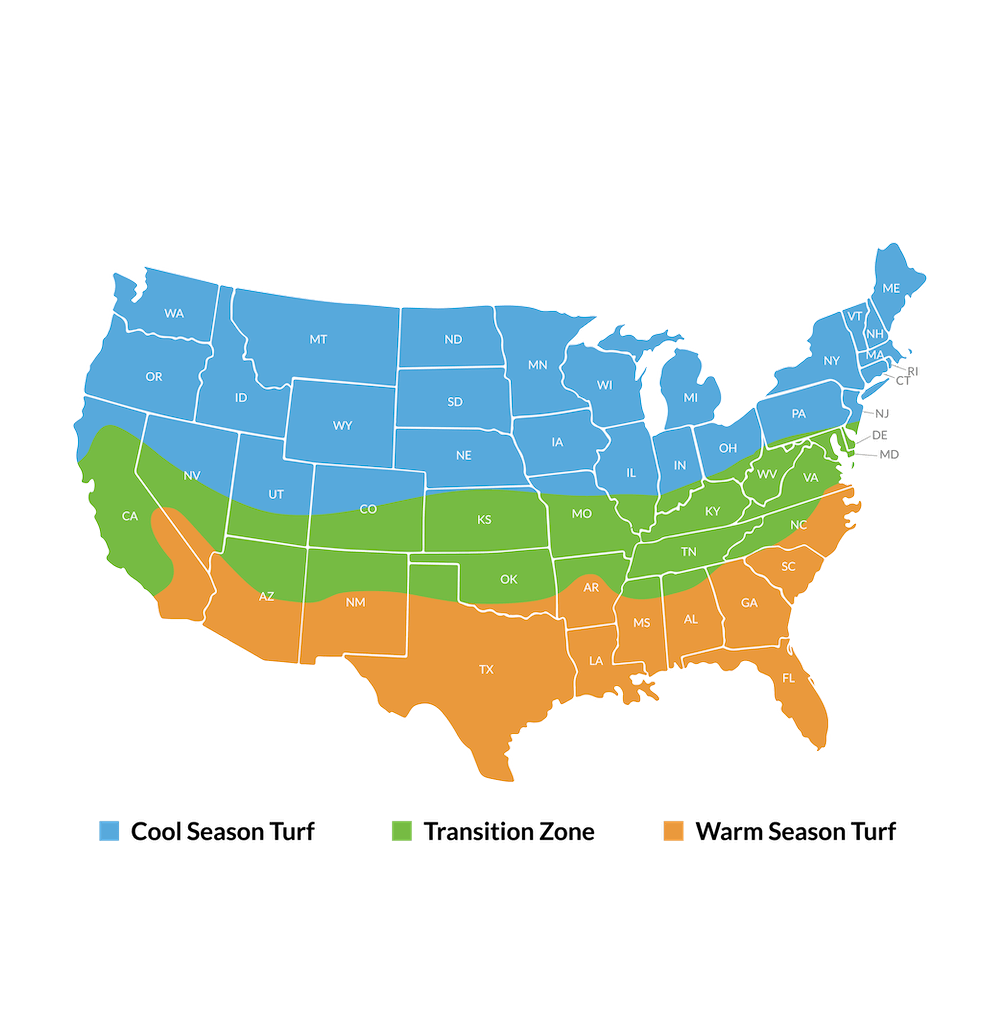
Turf Zone Map (Warm Season, Cool Season, and the Transition Zone)
Topdressing with products like CarbonizPN can provide benefits for both types of grasses, including improved soil health and nutrient uptake. Topdressing is often thought to be labor-intensive, but belt-driven equipment, like the Ecolawn Applicator, can make this process a breeze.
Overall, understanding the differences between cool-season and warm-season grasses is important for proper lawn maintenance and care. By knowing the unique needs of each type of grass, you can ensure a healthy and vibrant lawn year-round.
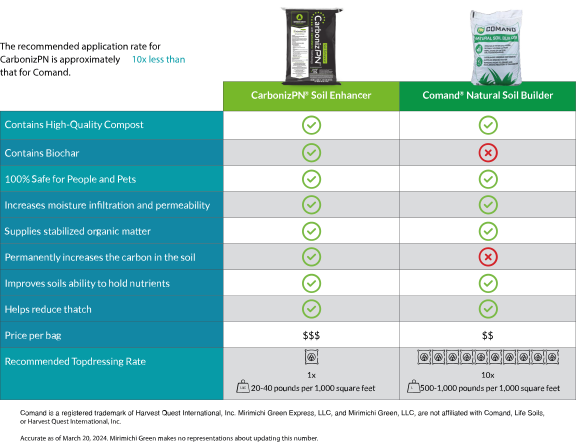
CarbonizPN vs. Comand: Choosing the Right Soil Enhancer for Your Project
When it comes to improving soil health, moisture management, and overall turf performance, not all soil amendments are created equal.
The Best Fall Overseeding Tips for a Thicker, Greener Lawn
The Best Fall Overseeding Tips for a Thicker, Greener Lawn If your lawn looks patchy, thin, or tired after summer,

Navigating Fertilizer Tariffs: Smart Strategies for Rising Costs
Navigating Rising Costs: Ways to Deal with US Tariffs on Agronomic Inputs Farmers, landscapers, and turf managers across America are

Replanting in Winter: Preparing Your Landscape for Spring
As winter settles in, many landscapers and gardeners put their tools down, thinking that landscaping tasks are on hold until

Remediating Salt Damage to Lawns from Winter Deicing Applications
Winter safety often depends on the use of deicing products, such as rock salt (sodium chloride), on roads, sidewalks, and
Understanding Soil Organic Matter and Carbon Content
Soil organic matter (SOM) is a crucial component of healthy soil, playing a significant role in plant health care (PHC)
Essential-G Discontinuation & Introduction of CarbonizPN-G: Your Questions Answered
Dear Mirimichi Green Community, We have some important news to share: Essential-G is being discontinued and replaced by our new

Remediating Salt in Soils Due to Hurricanes and Storm Surge
CarbonizPN: The Ultimate Solution for Hurricane-Induced Salt Damage When hurricanes hit, the resulting storm surge and wind-driven saltwater can wreak
Understanding USDA Certified Biobased Products: What It Means and Why It Matters
In today’s world, more consumers are becoming conscious of the environmental impact of the products they use. This shift towards