Topdressing Cool Season Grasses versus Warm Season Grasses with CarbonizPN
Topdressing is one of the best things you can do for a lawn—but when you do it depends entirely on the type of grass you’re working with. Cool-season and warm-season grasses grow on opposite schedules, so the timing that helps one can set the other back. Here’s how the two differ, when to topdress each, and how CarbonizPN® fits either program.
Cool-Season vs. Warm-Season Grasses
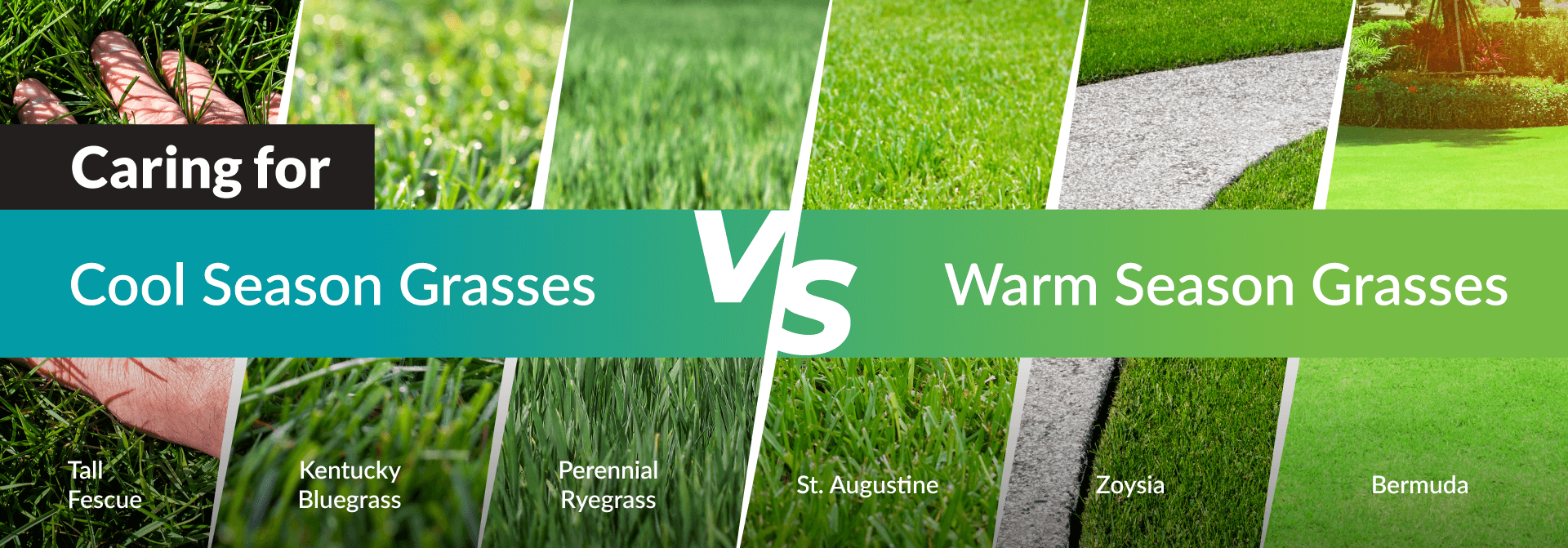
Cool-season grasses—Kentucky bluegrass, tall fescue, and perennial ryegrass—dominate the northern U.S. They thrive in cooler temperatures, grow most actively in spring and fall, and are prized for dense, lush cover.
Warm-season grasses—bermudagrass, St. Augustine, and zoysia—are the standard across the South. They love heat, do most of their growing in summer, and are valued for durability and drought tolerance.
How Each Type Grows — and Why It Matters
The big difference is how they spread. Most cool-season grasses are bunch-type: they grow in clumps and don’t spread by runners (Kentucky bluegrass, which spreads by rhizomes, is the notable exception). Because they don’t fill gaps on their own, cool-season lawns usually need overseeding to stay thick. Warm-season grasses are mostly spreading types that creep by rhizomes and stolons, so they fill in bare spots themselves and need far less overseeding.
That growth pattern drives the whole maintenance calendar—including when to topdress, aerate, and seed.
When to Topdress Cool-Season vs. Warm-Season Turf
- Cool-season grasses: topdress, aerate, and overseed in early fall, while the grass is actively growing and roots are building ahead of winter. (Early spring is a secondary window.)
- Warm-season grasses: do this work in late spring to early summer, once the grass has greened up and is growing vigorously.
Matching the work to the active growth window gives the turf the best chance to recover and take full advantage of the amendment.
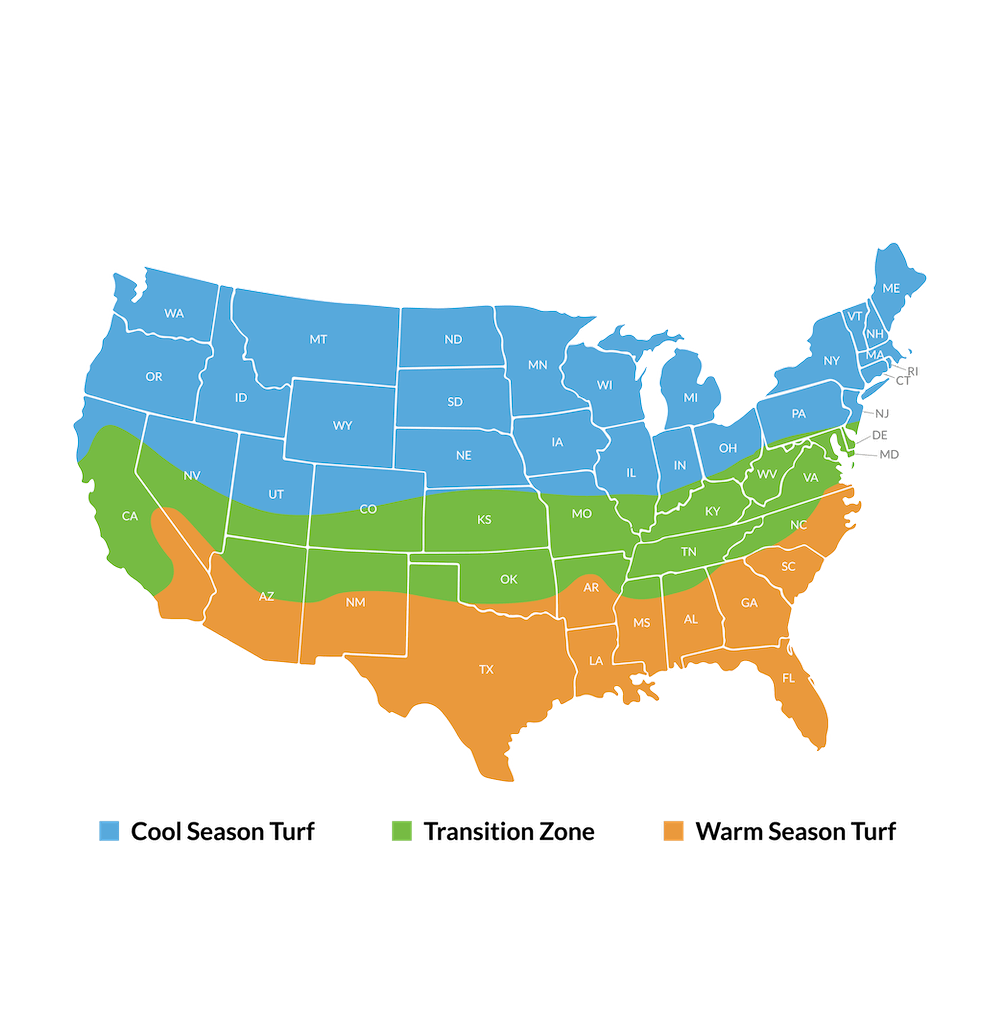
The Transition Zone
Between the two lies the transition zone—a band across the Mid-Atlantic, the Carolinas, the Tidewater region, Kentucky, and the lower Midwest where both grass types are grown and neither is perfectly suited to the climate. Here, timing depends on which grass you have: treat tall fescue and other cool-season stands on the fall schedule, and bermuda or zoysia on the late-spring schedule. When in doubt, topdress when your grass is actively growing.
Topdressing Both Types with CarbonizPN
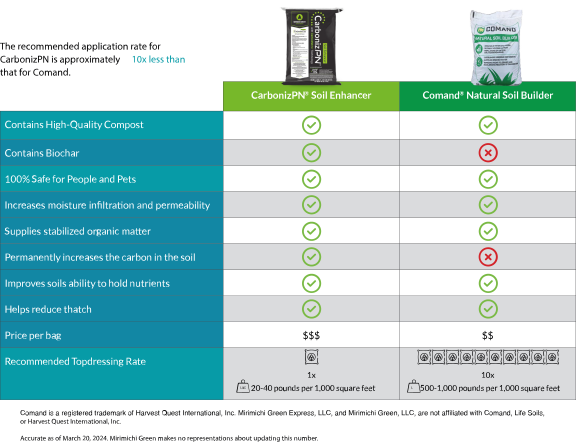
Whatever the grass, a thin topdressing of CarbonizPN or the granular CarbonizPN®-G—a blend of biochar and mature compost—improves soil structure, moisture retention, nutrient uptake, and microbial activity. Those benefits apply equally to cool- and warm-season soils; only the timing changes. Fall topdressing also builds soil resilience ahead of winter, which matters in areas prone to deicing-salt damage.
Rates and Equipment
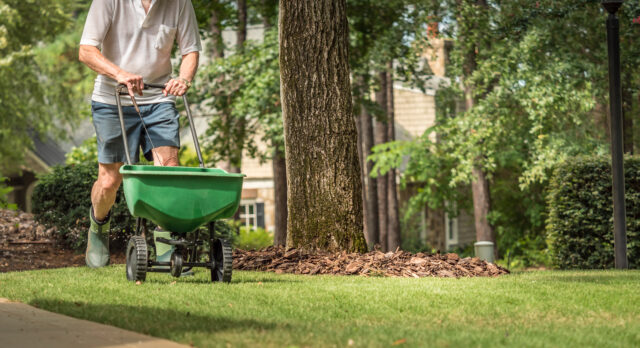
Apply CarbonizPN at roughly 20–50 lbs per 1,000 sq ft depending on soil condition, aiming for a thin, even layer. Topdressing is often thought of as labor-intensive, but a belt-driven spreader like the Ecolawn applicator makes quick work of it. For the full method—by hand or by machine—see our step-by-step topdressing guide.
Understanding how your grass grows is the key to a healthy, vibrant lawn year-round. Contact Mirimichi Green for rate recommendations, or find CarbonizPN at a distributor near you.